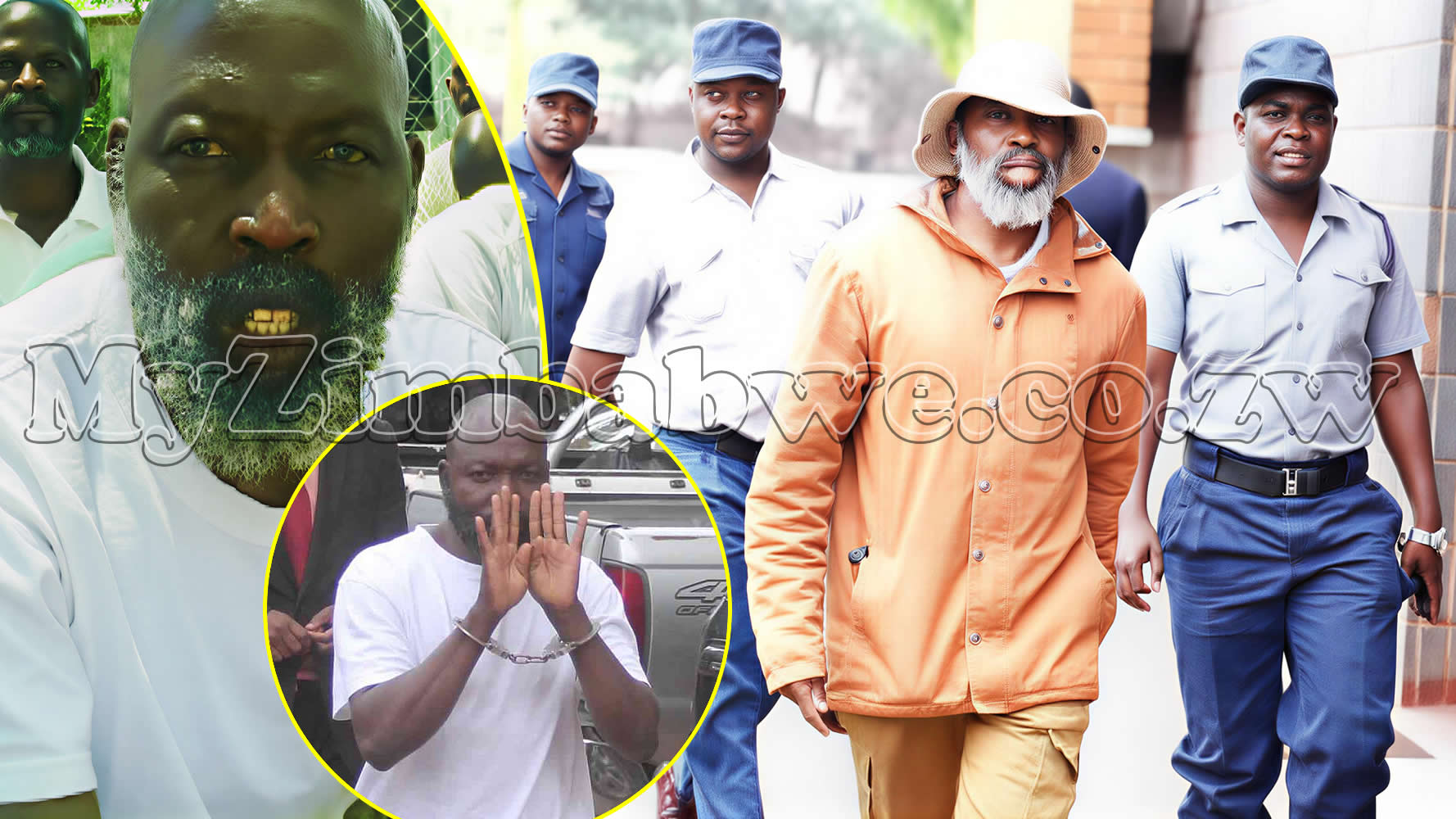
HARARE – The High Court’s recent decision to grant bail pending appeal to self-styled prophet Madzibaba Ishmael Chokurongerwa, who was previously sentenced to 20 years in prison for rape and child abuse, has left many across Zimbabwe in a state of profound disbelief. The question on everyone’s lips is: how did a man convicted of such grave offences manage to walk free so swiftly? This investigative report delves into the intricate legal manoeuvres that paved the way for this controversial ruling, examining the technicalities exploited by his legal team and the broader implications for justice in Zimbabwe.
Madzibaba Ishmael, leader of the Johane Masowe eChishanu Gorejena Penyeranyika Apostolic Sect, was convicted on 5 December 2025, of one count of rape under the Criminal Law (Codification and Reform) Act. The trial court, presided over by Magistrate Estere Chivasa, handed down a severe 20-year prison sentence, a judgment that many believed would ensure justice for the victims and serve as a deterrent against similar abuses within religious communities. However, less than four months later, on 4 March 2026, Justice Neville Wamambo of the High Court of Zimbabwe in Harare granted Chokurongerwa bail, citing “prospects of success on appeal.”
Unpacking the ‘Prospects of Success on Appeal’
The concept of “prospects of success on appeal” is a critical legal principle that allows a convicted person to be released on bail while their appeal against conviction or sentence is being heard. It hinges on the appellant demonstrating to the court that there are reasonable grounds to believe their appeal might succeed. In Madzibaba Ishmael’s case, Justice Wamambo identified several significant issues that he believed cast doubt on the original conviction, thereby providing the necessary grounds for bail.
One of the most striking aspects highlighted by the High Court was the handling of DNA evidence. Justice Wamambo noted that a High Court order outlining the procedures for obtaining and handling DNA samples was not followed to the letter. He stated, “The chain of custody appears on the face of it to be broken.” This procedural lapse in such crucial evidence raises serious questions about the integrity of the forensic process and could be a substantial point of contention in the appeal. For a conviction heavily reliant on scientific evidence, any doubt regarding its collection and preservation can significantly weaken the prosecution’s case.
Another contentious point was the age of the complainant, identified only as P.T. The trial court had relied on an age estimation report, based on a dental examination, which concluded that P.T. was approximately 15 years old on 2 April 2024. However, the High Court pointed out inconsistencies, noting that the complainant herself testified that her date of birth was 16 December 2004, which would place her above the age of consent at the time of the alleged offence. Furthermore, P.T.’s mother produced a birth certificate supporting this, although the trial magistrate had questioned its authenticity, suggesting it might have been obtained after Chokurongerwa’s arrest. The High Court viewed this discrepancy as a material issue that could influence the appeal’s outcome.
Perhaps the most unusual and legally challenging aspect of the case was the absence of a direct complaint of rape from the alleged victim. Justice Wamambo remarked, “This matter is indeed a novel one… it is a matter where there is no complaint of rape from the complainant or her guardian.” In fact, the court record indicates that P.T. testified during the trial and “exonerated the applicant.” The High Court also criticised the trial court’s reasoning, which had concluded that rape occurred because the complainant never explicitly stated she consented to sexual intercourse. Justice Wamambo deemed this a “reverse onus” or a “clear misdirection,” asserting that it is the complainant who should testify to a lack of consent, not for the court to infer it from her silence on consent. This highlights a fundamental legal principle: the burden of proof lies with the prosecution to demonstrate non-consensual sex.
These technicalities, individually and collectively, led Justice Wamambo to conclude that Chokurongerwa had strong prospects of success on appeal, thereby reducing the likelihood of him absconding. The court ordered his release on US$1,000 bail, with conditions that he must reside at Number 16 Jachacha Crescent in Msasa Park, Harare, and report to CID Law and Order in Harare three times a week. He is also required to appear in the High Court whenever needed for the hearing and determination of his appeal.
The Shadow of Political Undercurrents
The swift release of Madzibaba Ishmael has reignited public debate about the influence of powerful religious leaders in Zimbabwe and the perceived “dual justice system” that appears to operate within the nation. Apostolic sects, such as the one led by Chokurongerwa, command massive followings, often numbering in the millions, making them a significant voting bloc in Zimbabwean politics. This demographic power has historically led to political figures, including President Emmerson Mnangagwa, actively courting these religious groups, particularly during election campaigns.
Research indicates a long-standing relationship between the ruling ZANU-PF party and various apostolic sects. Leaders of these churches have often been seen endorsing political candidates and mobilising their congregants to vote for the ruling party. This symbiotic relationship raises questions about whether “behind-the-scenes” lobbying or political considerations played a role in Chokurongerwa’s release. The perception that certain individuals, especially those with political utility, can navigate the justice system differently from ordinary citizens fuels public cynicism and erodes trust in the rule of law.
This case, therefore, becomes a stark illustration of what many perceive as a “dual justice system” in Zimbabwe. While ordinary citizens often face stringent bail conditions and lengthy detentions for lesser offences, powerful religious leaders, despite serious convictions, sometimes appear to benefit from legal interpretations that facilitate their freedom. This disparity raises concerns about equality before the law and whether justice is truly blind to power and influence.
The Victims’ Fear and Broader Implications
For the victims and their families, Madzibaba Ishmael’s release is a devastating blow. The initial conviction and 20-year sentence offered a semblance of justice and safety. His sudden freedom, however, reintroduces fear and uncertainty. The original charges against Chokurongerwa stemmed from a police raid on his Lily Farm compound in Nyabira in March 2024. During the raid, authorities rescued 251 children, many of whom were undocumented and not attending school. Disturbingly, 16 shallow graves, including those of infants, were also discovered on the property, hinting at a much darker reality within the sect. Two women from the sect were also arrested in April 2024 on human trafficking allegations, further underscoring the serious nature of the abuses reported.
The fact that a figure implicated in such widespread alleged abuses, and convicted of rape, is now out on bail, creates a climate of terror for those who dared to speak out or were affected by his actions. It sends a chilling message about the vulnerability of witnesses and complainants when facing powerful individuals. The psychological impact on the rescued children and their families, who had perhaps begun to heal, cannot be overstated.
This case transcends the individual circumstances of Madzibaba Ishmael; it highlights systemic challenges within Zimbabwe’s legal and political landscape. It forces a critical examination of judicial independence, the influence of political patronage, and the protection of vulnerable populations from powerful figures. The public remains watchful, grappling with the fundamental question: Is this High Court ruling a genuine legal victory, meticulously argued and justly decided, or is it a carefully orchestrated escape from accountability, facilitated by the very systems designed to uphold justice?

Follow @MyZimbabweNews